• 4 months

    How/why are you printing on a goddammn mirror?

    Is that a thing? Is it normal? I never saw it before…

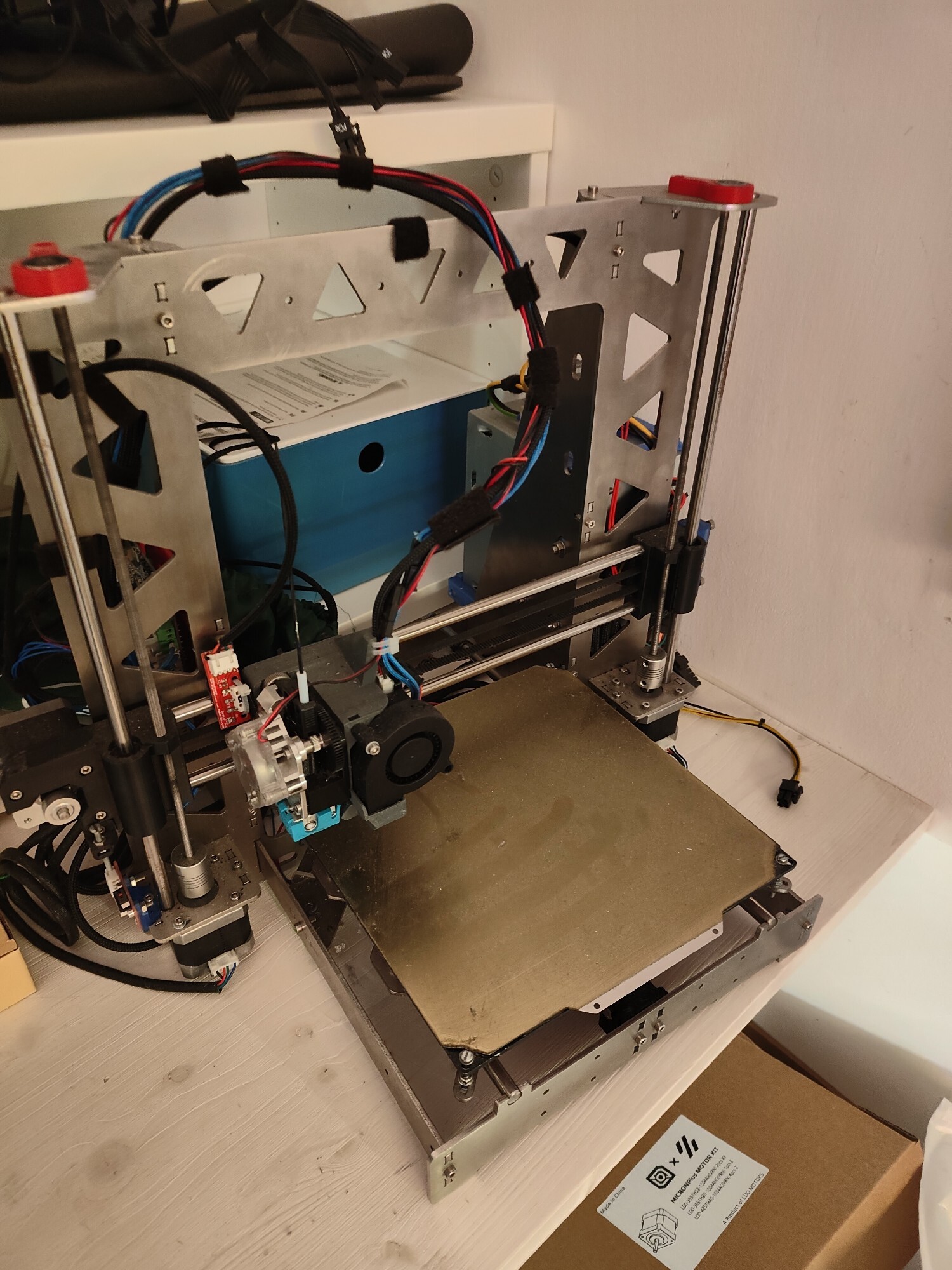
    • I built this printer around 11 years ago, it’s a Folger 2020 i3, the company folded years ago. This is back before flexible PEI coated steel build plates were common; the bed assembly is a simple aluminum plate with a PCB heater suspended above it at the four corners by spring-loaded screws, and then the glass is binder clipped onto that. Glass was pretty much the meta for 3D printer build plates at the time because it’s a perfectly flat material that’s cheap and easy to source. The choice of a mirror over clear glass was mostly an aesthetic choice, though sometimes it can make it easier to manually level the bed, it makes it easier to see the gap between the nozzle and the bed.

      This machine is pretty legacy by now and it’s starting to show some signs of wear but it does still work.

    • It used to be normal to print on glass/mirror beds…it hasn’t really been a thing on printers for some years now since spring steel PEI sheets became the standard even for the cheapest entry level printers. So my guess is this is either a fairly old printer or a homemade budget-printer.

    • 4 months

      It’s kind of normal. Printing on a glass is normal, some people pick a mirror because it conducts heat slightly better.

        • 4 months

          Glass is guaranteed to be flat. The thicker the flatter, and mirrors tend to be thin.

          • Glass is absolutely not guaranteed to be flat or without defect. Some glasses are. Mirrors have to be or they don’t work, they come precut in 300x300mm plates for cheap from IKEA. You’re free to check absolutely any thread from the time to see what people’s motivations were. Moving mass on a bedslinger would’ve been a bigger consideration.

  • There any good software that helps automatically select the best edge to use a print base that looks at minimizing supports as a key variable?