
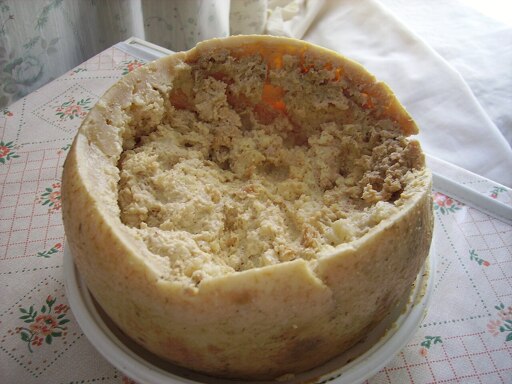
The larvae of the cheese fly (Piophila casei) are deliberately introduced to pecorino cheese, where their digestive action produces an advanced level of fermentation, including a breakdown of the cheese’s fats. The cheese’s texture softens, and a liquid called làgrima (‘teardrop’) may seep out.

Source: Wikipedia.

  • prettybunnys@piefed.social
    link
    fedilink
    English
    arrow-up
    11
    ·
    2 days ago

    It is possible that the larvae could survive in the intestine, causing enteric pseudomyiasis,[2] which can manifest as nausea, vomiting and gastrointestinal upset;[3] however, no cases have been linked to the cheese.[4] Additionally, these larvae can carry harmful microorganisms that may lead to infections. Due to these risks, Italian authorities have banned the sale of this cheese, deeming it dangerous. Consequently, it is also prohibited across the European Union, as EU food safety regulations mandate that only food safe for consumption can be sold.[2]