I recently got into making hardware to be used by people with medical issues. Specifically, I made a handheld physiotherapy game console.
That’s a simple device using off-the-shelf components and a 3D printed shell.
Parts alone cost around €60 if I buy them off Aliexpress and around €100 if I go for more reliable industrial sources.
Assembly (some hand soldering required), flashing the software, testing, packaging and shipping takes about two hours. I don’t have any employees, so if I do this at the rate I get paid at my day job, that’s another €150. If I had employees, it would be similar due to tax and insurance costs.
Now I have a device for €250 plus shipping, but the calculation isn’t done here.
I also have to account for DOA parts, support (in my country there’s 2 years of warranty on electronics like that), returns (we have a 2 week free return law in my country) and a reserve for potential claims if something catastrophic happens (e.g. a battery blowing up and burning down a customer’s house).
So that easily doubles the price to €500.
But we are not done yet. First we need to account for R&D. So far I spent around 200h developing the device and the games for it, so that’s €15 000 in dev costs, and development is not nearly finished. I expect this to easily double.
Then come certifications. I will need CE including the radio part, certification for that will cost €10k-20k and that is if I don’t need to make changes. If the base board that I am using turns out to not be CE compliant, I will have to DIY a whole PCB design that passes CE and do the certification again.
If I want to have any chance of getting this paid for by an insurance company, I need medical certification. I spoke to a large manufacturer of medical devices (I wanted them to take over my project, but they declined), and they said that medical certification for a device like this is around €500 000.
I expect to maybe sell a few hundred devices per year if I am lucky, and I don’t know how long the market for this device would work. Let’s go with a four-year period until I want to at least break even, because anything longer than that would be very risky.
So let’s go with an unrealistic best case of 1000 devices per year, so 4000 total.
That means, the one-time costs would factor in at least €150 per device. If I only sell 100 devices per year (more realistic estimate) I would need to add €1500 per device.
Btw, medical certification only means there is a chance that insurances pay for it. It doesn’t mean they actually will pay for it. So if I’m unlucky, I paid half a million for the certification and the insurances won’t care.
So now we are up to €650 - €2000 for a device that’s €50 in off-the-shelf hardware. And I haven’t made any money from it apart from the salary for assembling it in my bedroom. And on top of that I also need to pay for taxes and stuff.
This is super frustrating. A handful of kids are already using that device, and every single family of them reports that it made their lives much, much easier, their therapy efficiency much better and improved the health of the children.
I even opensourced the design, to maybe give kids access to this device, but so far nobody dared reproducing it.
I don’t know how to spread that device in a manner that people can afford.
Back to OP: the device in question is developed by a real company, having to pay for patents (both they want to hold and the ones they need to license), salaries, taxes, insurances, and so on, and it’s a really custom device with very custom parts. The price is neither unrealistic or crazy at all. It’s, in fact, really low for what it is.
The fact that we can get amazing high tech products like smartphones for a few €100 is totally crazy and only possible because millions of them are produced (economy of scale) and they are produced by exploiting foreign super cheap labour at every stage of the process.
What’s the device called or where can I find the open sourced design? I wouldn’t mind giving up a few weekends making one.
I’m not sure what to do about distribution other than just handing them out for free, having them sign waivers, and getting funding from a charity or similar organization.
Most of the documentation is in German, since my primary audience so far were people living close enough that I can hand them devices and I haven’t gotten around to translating everything to English. But I think it should be simple enough that auto-translation should be understandable.
I’m not sure what to do about distribution other than just handing them out for free, having them sign waivers, and getting funding from a charity or similar organization.
That’s what I have been doing so far. I “sold” a few of them for the price of the parts. I donated two to two different local hospitals to use with in-patients. I got a physiotherapy device company to donate money for a scientific study at one of the hospitals, where they will hand 30 devices to patients to keep them and measure how it improves their therapy experience. But so far that’s pretty much the end of the road.
I’m already worrying about how I can even do the study without getting in trouble in regards to taxes and stuff.
It would be really cool if someone else would start picking these up and making some for kids that need it.
This is mainly made for kids with Cystic Fibrosis (like my kid, who was my original audience for the device), but I talked to a few people with broader experience in regards to lung conditions, and it would also work well for kids with Asthma (for RMT therapy) or people with COPD (for inhalation and PEP/RMT therapy). PEP is breathing out against resistance, RMT is breathing in against resistance.
How are you able to obtain certification with aliexpress suppliers? They generally can’t provide proper (trustworthy) documentation that they comply with standards, so your certification and compliance chain is broken.
Can’t really expect a niche medical device to be sold cheap. Kinda like hearing aid initically could cost a lot but right now it can be pretty accessible.
I don’t know about this device specifically, since it seems a bit too specialized for plausible deniability and I’m not really sure what the regulations surrounding this specific market are, but a lot of times not being available through insurance is actually an effort to keep costs down for the uninsured and underinsured, as medical devices are regulated much more strictly than things which can be purchased by anyone who wants one, and meeting those regulations and undergoing testing and whatever else is super expensive.
All those weird “as seen on tv” gadgets are that sort of thing, where you go “who is that even for?” because they show able-bodied people using them so as not to imply the thing is a disability aid.
Tbh, no. The device is realistically priced for a niche medical device with low number of units sold. Medical certification alone is around €500k. Development costs for a very custom device like this are also quite high. The price point isn’t crazy at all.
At the same time, health insurances (even more so here in Europe than in the US) are pretty slow to pay for new technology, especially if the benefit isn’t immediately tangible.
As in, “Will this reduce the need for further insurance spending by e.g. preventing hospital visits?” or “Will this allow a person who is on disability benefits to return to work?”


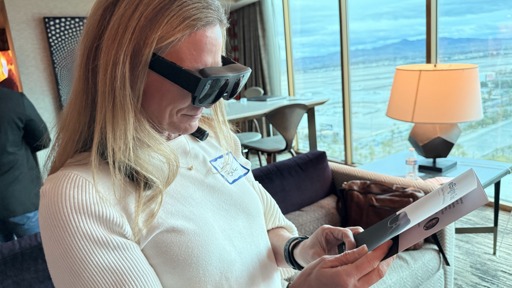
lol, who is the one person downvoting technology advancements designed to help the blind?
To be fair, “1. The device costs $4,950 and is not covered by most insurance” seems more dystopian than, “this will help the people that need it.”
I recently got into making hardware to be used by people with medical issues. Specifically, I made a handheld physiotherapy game console.
That’s a simple device using off-the-shelf components and a 3D printed shell.
Parts alone cost around €60 if I buy them off Aliexpress and around €100 if I go for more reliable industrial sources.
Assembly (some hand soldering required), flashing the software, testing, packaging and shipping takes about two hours. I don’t have any employees, so if I do this at the rate I get paid at my day job, that’s another €150. If I had employees, it would be similar due to tax and insurance costs.
Now I have a device for €250 plus shipping, but the calculation isn’t done here.
I also have to account for DOA parts, support (in my country there’s 2 years of warranty on electronics like that), returns (we have a 2 week free return law in my country) and a reserve for potential claims if something catastrophic happens (e.g. a battery blowing up and burning down a customer’s house).
So that easily doubles the price to €500.
But we are not done yet. First we need to account for R&D. So far I spent around 200h developing the device and the games for it, so that’s €15 000 in dev costs, and development is not nearly finished. I expect this to easily double.
Then come certifications. I will need CE including the radio part, certification for that will cost €10k-20k and that is if I don’t need to make changes. If the base board that I am using turns out to not be CE compliant, I will have to DIY a whole PCB design that passes CE and do the certification again.
If I want to have any chance of getting this paid for by an insurance company, I need medical certification. I spoke to a large manufacturer of medical devices (I wanted them to take over my project, but they declined), and they said that medical certification for a device like this is around €500 000.
I expect to maybe sell a few hundred devices per year if I am lucky, and I don’t know how long the market for this device would work. Let’s go with a four-year period until I want to at least break even, because anything longer than that would be very risky.
So let’s go with an unrealistic best case of 1000 devices per year, so 4000 total.
That means, the one-time costs would factor in at least €150 per device. If I only sell 100 devices per year (more realistic estimate) I would need to add €1500 per device.
Btw, medical certification only means there is a chance that insurances pay for it. It doesn’t mean they actually will pay for it. So if I’m unlucky, I paid half a million for the certification and the insurances won’t care.
So now we are up to €650 - €2000 for a device that’s €50 in off-the-shelf hardware. And I haven’t made any money from it apart from the salary for assembling it in my bedroom. And on top of that I also need to pay for taxes and stuff.
This is super frustrating. A handful of kids are already using that device, and every single family of them reports that it made their lives much, much easier, their therapy efficiency much better and improved the health of the children.
I even opensourced the design, to maybe give kids access to this device, but so far nobody dared reproducing it.
I don’t know how to spread that device in a manner that people can afford.
Back to OP: the device in question is developed by a real company, having to pay for patents (both they want to hold and the ones they need to license), salaries, taxes, insurances, and so on, and it’s a really custom device with very custom parts. The price is neither unrealistic or crazy at all. It’s, in fact, really low for what it is.
The fact that we can get amazing high tech products like smartphones for a few €100 is totally crazy and only possible because millions of them are produced (economy of scale) and they are produced by exploiting foreign super cheap labour at every stage of the process.
What’s the device called or where can I find the open sourced design? I wouldn’t mind giving up a few weekends making one.
I’m not sure what to do about distribution other than just handing them out for free, having them sign waivers, and getting funding from a charity or similar organization.
It’s called PEPit, and it can be found here: https://github.com/Dakkaron/PEPit
Most of the documentation is in German, since my primary audience so far were people living close enough that I can hand them devices and I haven’t gotten around to translating everything to English. But I think it should be simple enough that auto-translation should be understandable.
That’s what I have been doing so far. I “sold” a few of them for the price of the parts. I donated two to two different local hospitals to use with in-patients. I got a physiotherapy device company to donate money for a scientific study at one of the hospitals, where they will hand 30 devices to patients to keep them and measure how it improves their therapy experience. But so far that’s pretty much the end of the road.
I’m already worrying about how I can even do the study without getting in trouble in regards to taxes and stuff.
It would be really cool if someone else would start picking these up and making some for kids that need it.
This is mainly made for kids with Cystic Fibrosis (like my kid, who was my original audience for the device), but I talked to a few people with broader experience in regards to lung conditions, and it would also work well for kids with Asthma (for RMT therapy) or people with COPD (for inhalation and PEP/RMT therapy). PEP is breathing out against resistance, RMT is breathing in against resistance.
How are you able to obtain certification with aliexpress suppliers? They generally can’t provide proper (trustworthy) documentation that they comply with standards, so your certification and compliance chain is broken.
Not, that’s part of the issue. And also a big reason why someone would pay for much more expensive industrial sources.
Can’t really expect a niche medical device to be sold cheap. Kinda like hearing aid initically could cost a lot but right now it can be pretty accessible.
I don’t know about this device specifically, since it seems a bit too specialized for plausible deniability and I’m not really sure what the regulations surrounding this specific market are, but a lot of times not being available through insurance is actually an effort to keep costs down for the uninsured and underinsured, as medical devices are regulated much more strictly than things which can be purchased by anyone who wants one, and meeting those regulations and undergoing testing and whatever else is super expensive.
All those weird “as seen on tv” gadgets are that sort of thing, where you go “who is that even for?” because they show able-bodied people using them so as not to imply the thing is a disability aid.
This seems like a US problem not a device problem.
Tbh, no. The device is realistically priced for a niche medical device with low number of units sold. Medical certification alone is around €500k. Development costs for a very custom device like this are also quite high. The price point isn’t crazy at all.
At the same time, health insurances (even more so here in Europe than in the US) are pretty slow to pay for new technology, especially if the benefit isn’t immediately tangible.
As in, “Will this reduce the need for further insurance spending by e.g. preventing hospital visits?” or “Will this allow a person who is on disability benefits to return to work?”
Looks like a second person wants to keep the blind in the dark about this advancement.
Must be some Big Cane executives.
They’ve probably had their parents murdered by a blind gunman.
Gunman: “Give me your wallet.”
Parents: “we’re over here.”
Gunman: “oh shit. my bad. Give me your wallet”
Kid: “I guess I’m Batman now”