

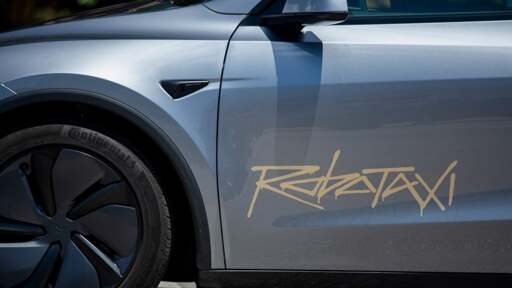
Self-driving cars are often marketed as safer than human drivers, but new data suggests that may not always be the case.
Citing data from the National Highway Traffic Safety Administration (NHTSA), Electrek reports that Tesla disclosed five new crashes involving its robotaxi fleet in Austin. The new data raises concerns about how safe Tesla’s systems really are compared to the average driver.
The incidents included a collision with a fixed object at 17 miles per hour, a crash with a bus while the Tesla vehicle was stopped, a crash with a truck at four miles per hour, and two cases where Tesla vehicles backed into fixed objects at low speeds.
I don’t think it’s necessarily about cost. They were removing sensors both before costs rose and supply became more limited with things like the tariffs.
Too many sensors also causes issues, adding more is not an easy fix. Sensor Fusion is a notoriously difficult part of robotics. It can help with edge cases and verification, but it can also exacerbate issues. Sensors will report different things at some point. Which one gets priority? Is a sensor failing or reporting inaccurate data? How do you determine what is inaccurate if the data is still within normal tolerances?
More on topic though… My question is why is the robotaxi accident rate different from the regular FSD rate? Ostensibly they should be nearly identical.
The one that says there’s a danger.
Alright, so the radar is detecting a large object in front of the vehicle while travelling at highway speeds. The vision system can see the road is clear.
So with your assumption of listening to whatever says there’s an issue, it slams on the brakes to stop the car. But it’s actually an overpass, or overhead sign that the radar is reflecting back from while the road is clear. Now you have phantom braking.
Now extend that to a sensor or connection failure. The radar or a wiring harness is failing and sporadically reporting back close contacts that don’t exist. More phantom braking, and this time with no obvious cause.
Phantom braking is better than Wyle E. Coyoteing a wall.
Again, better than not braking because another sensor says there’s nothing ahead. I would hope that flaky sensors is something that would cause the vehicle to show a “needs service” light or something. But, even without that, if your car is doing phantom braking, I’d hope you’d take it in.
But, consider your scenario without radar and with only a camera sensor. The vision system “can see the road is clear”, and there’s no radar sensor to tell it otherwise. Turns out the vision system is buggy, or the lens is broken, or the camera got knocked out of alignment, or whatever. Now it’s claiming the road ahead is clear when in fact there’s a train currently in the train crossing directly ahead. Boom, now you hit the train. I’d much prefer phantom breaking and having multiple sensors each trying to detect dangers ahead.
FYI, the fake wall was not reproducible on the latest hardware, that test was done on an older HW3 car, not the cars operating as robotaxi which are HW4.
The new hardware existed at the time, but he chose to use outdated software and hardware for the test.
Hardware that was still on the road, or something that had been recalled?
As a consumer product, you are responsible and supposed to be paying attention at all times and be ready to take over.
It is completely acceptable that it does not function perfectly in every scenario and something like a fake wall put on the road causes issues, that is why you need to pay attention.
There is nothing to recall about this situation.
If the car is failing on things it shouldn’t be, like both Tesla and Waymo failing to properly stop for school busses while in autonomous mode, that does require an update. Alhough ive seen 0 reports of an autonomous Tesla doing this yet only supervised ones.
A Tesla not stopping for a school bus in supervised mode is acceptable though because the driver is responsible to stop.
Edit: and note, a problem like the school busses is a visual processing understanding problem. Lidar won’t help with that kind or problem.
Edit: and sorry to be clear, it is hardware still on the road, but I’m saying its acceptable that hardware does it because its not autonomous. If the newer hardware running without supervisors was doing it, that’s another story.
So, hardware that was still on the road.
Ya, hardware that is on the road that won’t ever be autonomous without getting upgraded hardware amd software because its insufficient for autonomy, but has been shown to not be a problem on the latest autonomous versions.
Regular FSD rate has the driver (you) monitoring the car so there will be less accidents IF you properly stay attentive as you’re supposed to be.
The FSD rides with a saftey monitor (passenger seat) had a button to stop the ride.
The driverless and no monitor cars have nothing.
So you get more accidents as you remove that supervision.
Edit: this would be on the same software versions… it will obviously get better to some extent, so comparing old versions to new versions really only tells us its getting better or worse in relation to the past rates, but in all 3 scenarios there should still be different rates of accidents on the same software.
The unsupervised cars are very unlikely to be involved in these crashes yet because according to Robotaxi tracker there was only a single one of those operational and only for the final week of January.
As you suggest there’s a difference in how much the monitor can really do about FSD misbehaving compared to a driver in the driver’s seat though. On the other hand they’re still forced to have the monitor behind the wheel in California so you wouldn’t expect a difference in accident rate based on that there, would be interesting to compare.
There are multiple unsupervised cars around now, it was only the 1 before earnings call (that went away), then a few days after earnings they came back and weren’t followed by chase cars. There’s a handful of videos over many days out there now if you want to watch any. The latest gaffe video I’ve seen is from last week where it drove into (edit: road closed) construction zone that wasn’t blocked off.
I would still expect a difference between California and people like you and me using it.
My understanding is that in California, they’ve been told not to intervene unless necessary, but when someone like us is behind the steering wheel what we consider necessary is going to be different than what they’ve been told to consider necessary.
So we would likely intervene much sooner than the saftey driver in California, which would mean we were letting the car get into less situations we perceive to be dicey.
Yeah I seen that video and another where they went back and forth for an hour in a single unsupervised Tesla. One thing to note is that they are all geofenced to a single extremely limited route that spans about a 20 minute drive along Riverside Dr and S Lamar Blvd with the ability to drive on short sections of some of the crossing streets there, that’s it.
Edit: my bad, that’s was about the January reporting period. Ignore my other message if you saw it.