Hey all. I’ve recently swapped to Linux and I’ve been really enjoying it so far. I’m still pretty new to basically every aspect of it, though, so I’m not super sure what things I should be wary of with regard to hardware, in particular with Mint.

I was looking at buying a newer laptop to keep up with my main game, but it occurred to me that newer hardware may come with either a host of issues or be less supported than older hardware.

Any advice for laptops in this regard?

  • 1 month

    You can save buckets of money looking for used hardware. I got a crazy nice laptop from Craigslist for <$300.

    If you can, bring a live USB stick with you and test it out before you purchase. Check peripherals like wifi, audio, camera, bluetooth, etc.

      • I have a framework 13 running fedora and I absolutely love it. Upfront costs are expensive though - long term cost might be more reasonable (or even less) if I upgrade it for years/decades. Bit early to tell. But I do love it. Best laptop I’ve ever had (and I’ve had them all - even a thinkpad)

        • Wow, really? I was just looking at these and they are super interesting. You’re not wrong about that up front cost, though, yikes. What is it that makes them so seemingly modular? Is it proprietary stuff? Or is it just the focus of how it’s constructed? I’d be super leery about getting locked into ‘their ecosystem’ if they suddenly went under or something.

  • 1 month

    Make sure the ram is upgradable. A lot of them are soldered on these days and you’re stuck with that amount forever.

  • Lenovo ThinkPads work very nicely with Linux, and there’s a large second-hand market. The T and X series are especially great I find.

    The usual advice about avoiding soldered RAM holds in general, but right now used laptops are being bought just for stripping RAM. So I think putting up with soldered RAM in second hand devices (I’d go for at least 32G) can be a smart move because it may be a better deal (and often a smaller form factor).

    • Yeah, tell me about it on the price. I’m tempted to just bite the bullet on low framerates to see if prices come down, but this upgrade is already close to a year out anyway, so who knows. Maybe it goes up? Maybe society collapses, haha.

      I’ve never ended up upgrading RAM in a laptop, though. Is soldered versus not soldered really that huge of a deal? I mean, outside of what you mentioned here regarding the price.

      • Soldered RAM is just about impossible to upgrade/replace, you have to desolder it and do a bunch of other tasks. I have only ever seen one person do it on a modern laptop and it looked horrendous: https://gregdavill.com/posts/dell-xps13-ram-upgrade/

        I would just completely abandon any plans to upgrade a soldered RAM laptop unless you are extremely skilled.

        Unsoldered RAM is just push fit sockets that have a release clip you need to pull if the socket is already populated. The RAM can only go in one way, its super super easy. Just make sure you double check the spec of RAM you buying against the laptop specs to make sure you buy the right sort.

  • Usually wifi cards are the biggest potential issue. If you’re buying something brand new that hasn’t been out yet for that long, your best bet is to probably use something arch-based as a distro so that you get the latest kernel versions. When i bought my ideapad years ago i tried installing void on it, but the kernel on the iso was too old and my wifi card wasn’t recognized. I had to use usb tethering on my phone to update the system. After that everything was working.

    • Oof, thanks for the heads up. I honestly think I have a pretty good list of components to double check at this point and it’s driving me away from anything bleeding edge. Whatever I end up getting, it’ll be something that’s new-ish right now, but I’ll be buying it a year from now.

  • Definitely look for a 2nd hand one, you’ll have less issues.

    Don’t go toooo old as some had wifi issues back in the day (no / partial drivers)

    There’s a lot of refurbs by major brands (ie Dell) that are ex-corp lease models with some kind of warranty (which won’t cover the battery) because of the Win10 purge.

    I think the GPU is the main issue if you’re wanting to play games… and as others have said, gimmicks like touchscreens and fingerprint readers can be hit & miss.

    I’ve installed Mint on Lenovo, Dell and HP laptops with no major issues.

    • I’m a pretty big fan of Lenovo so far. My experience with their hardware has been pretty much complaint-free. It’s what I’m using right now with Mint, as well. GPU is definitely part of my current issue, the other is RAM, and the last is SSD space.

      GPU is just getting old, I certainly don’t have the RAM I need, and I sprung for the 500gb model because at the time this was primarily a game dev machine that only ever played Kerbal Space Program, haha.

  • 1 month

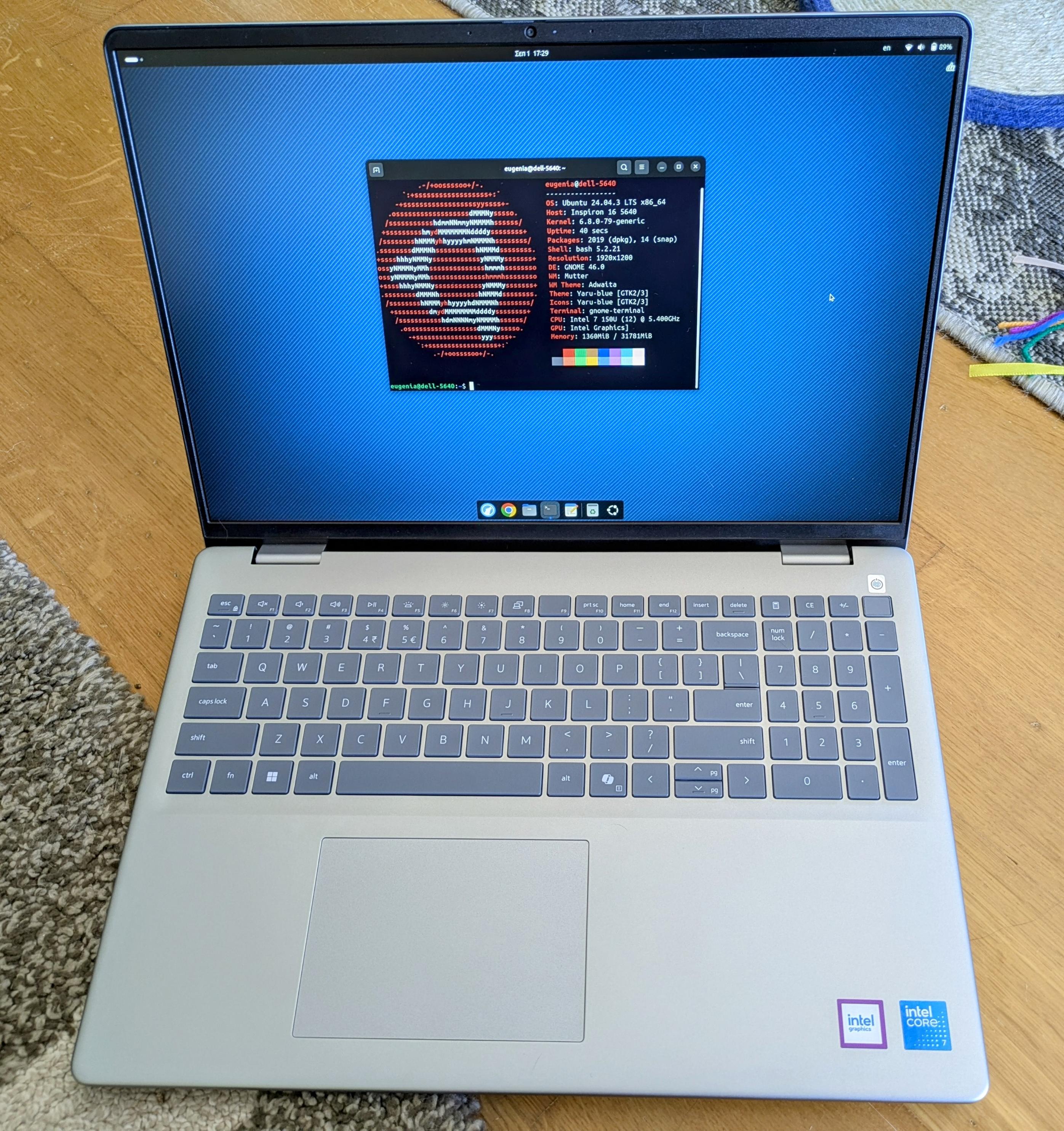
    If you want a compatible laptop, you get one that has a version that comes with Linux, without major kernel changes. For example, the DELL laptops. The DELL laptops get hate, but they are tested against Linux. I personally got the 5640: https://files.mastodon.social/media_attachments/files/115/129/776/310/532/073/original/ffe65da00bfd0b39.jpg It now runs Mint and Debian-Testing.

    I paid just $900 euros with 32GB of RAM, and my husband got the same with 64GB of RAM for $1000 here in Greece. Everything works 100%, except touchpad’s palm rejection (I made a bug report about it).

  • Depends. Sometimes you’ll get a PC magazine or blog cover an upcoming laptop and test Linux compatibility. Or someone writes a long Reddit post after they got it, or updates the Arch Wiki. There definitely are ways to learn about Linux-compatibility with new models. We used to have Amazon comments and reviews…Just be super cautious with all the AI bots and fake comparison sites out there.

    And it’s a bit more complicated with gaming stuff. Sometimes they’ll add a weird webcam, or unsupported RGB LED controller, or have weird quirks in the firmware. Some other model lines like a business laptop from Dell or Lenovo tend to be just fine and you’ll get 100% Linux compatibility. There’s no guarantee, but any way, after a few Linux nerds blogged about it you should be fine.

    • Thanks for the tips! I’ll make sure I’m checking individual components for compatibility long before I hover the buy button. Another user mentioned buying a year old as well, so I’ll probably also take that advice. And thanks for the heads up about fake comparison sites and such!

  • Amazon renewed I find dell Inspiron or xps work well. Used to be Lenovo think pads but not so sure about the newer ones.

    • I’d heard of Framework, Tuxedo, and system76, but not the others. Thanks for the pointers!

  • People say you should buy hardware that explicitly supports Linux, but I disagree. See if it works. If it doesn’t, then return it.

    I’ve never had an issue with Linux compatibility on a laptop, and I use gaming laptops.

  • I’m using a 10 years old Razer Blade Stealth 13 on Debian and so far no only minor problems with it.

    Consequently my advice is :

    • do you actually “need” a new one or do you just “want” one? if the later then could be 2nd hand
    • if you do then share either what your “main game” is or what its requirements are, because e.g Slay the Spire runs on nearly anything
    • do not buy something brand new unless you are ready to tinker, consider something a year old
    • whatever you do, check online review specifically on Linux installations, that will let you know if something somehow (typically inconsequential, e.g. LED tweaking) requires proprietary software
    • consider buying directly from a Linux pre-installed vendor, this way you are 100% sure it will work (but it’s typically not cheap)
    • My go-to is FFXIV, but I run it with a pretty large number of mods, which is what is hard to keep up with on my current laptop. Between that and just not being able to play any modern game, (in particular, I wanted to be able to play the new Silent Hill F), it’s definitely more of a want, but it’s a pretty strong want. 😅

      My current laptop is about 6 years old, and it’s getting to the point where my frame rate during raids is dipping below 60 frames quite frequently, even with the minimum settings, which is what got me looking at upgrading.

      I’ll look at Linux pre-installed vendors, though, I hadn’t thought about that. And the year old tech is a super good tip also, thanks!

  • Are you looking for a gaming laptop with a dedicated gpu or just a newer one with a faster cpu/igpu?

    • A gaming laptop. My current one is fine for most everything else at this point. I don’t game super hard, but when I play my go-to game or try out something new, I wanna at least not be bouncing between 30-45 FPS.