That‘s the main problem in Europe as well. I don‘t mind tariffs on heavily subsidized cars that are designed not to make profit but to destroy our industries. However, even then our manufacturers are in a constant crisis mode and unable to adapt. It‘s really pathetic.
But hey, when the car lobby is dead maybe that means more trains and cycling paths in the long run? Perhaps there‘s an opportunity here.
China has the battery production technologies and capabilities, the electric motor production, an unbelievable economy of scale, and insane levels of automation in their EV Factories, those are the main reasons behind their pricing and not “subsidies to destroy our industries”. Most subsidies, AFAIK, were tax cuts to purchases in China.
Are the subsidies specifically for destroying foreign markets? (😈MWAHAHAHAHAHAHA!)
Maybe, maybe not. I’m not a huge fan of the Chinese government, but I don’t think their subsidies program are intended to directly destroy foreign markets so much as put the country at the forefront of development and production… which can be perceived as the above.
As the study goes into in depth, tax credits are just one part of the system. There’s also direct subsidies(funding) for R&D, which is understandably very expensive, and below market value land sales among other things. In 2019 China put the equivalent of 1.73% of their GDP into industrial support, with below market land sales being a substantial portion of that. Next highest on the graphic is Korea at 0.67% GDP equivalent.
Moving away from the subsidies thing.
China has the battery production technologies and capabilities, the electric motor production, an unbelievable economy of scale, and insane levels of automation in their EV Factories,
(Found this out awhile ago when I was watching a video on how actually ridiculous the whole US - Greenland thing was.)
China has ~90% of the rare earth refinement capacity. Even if Trump wants/wanted Greenland for it’s resources, it would be over a decade to spin up enough refinement infrastructure to process whatever they would hypothetically extract.
China has invested HEAVILY in the entire supply chain from resource extraction to final product for a wide swath of GreenTech. When a lot of the rest of the world has switched from a majority production/export to majority consumption/import economy, or focused on soft products/research/etc of course they would see a country flooding their markets with products as adversarial. Regardless of if those foreign products are superior. Especially if the government of said foreign country is often interfering in political processes, intimidating other countries citizens, setting up extra judicial secret police networks in many countries, economic coercion…etc etc etc.
I’m not entirely convinced that the subsidy system is malicious, but the CCP isn’t above playing dirty. So I can fully understand the common reaction being that it is.
our manufacturers are in a constant crisis mode and unable to adapt
in 2023, Tesla released all the specs to move EVs to a 48V architecture to Detroit, saving a tremendous amount of wiring and eliminating the need for most sub systems and secondary computers. Detroit just ignored it, until 2026, and now Ford invented 48V architecture.
If it has to be forced, then it probably isn’t a good idea.
We’re only just now. Like this year just now, seeing batteries that can be made much cheaper and last much longer (sodium ion) and batteries that will last the actual lifetime of a vehicle (solid state lithiums, allegedly). The cars the past 5 years that have had LifePO4 batts will last decently long. Up until now you’ve been looking at EV’s that cost more, with batteries that will go bad in them that cost huge amounts of money to replace. A 10 year old Tesla with 200,000 miles on it is essentially garbage. No one will pay much for it because it’s about to need a $15,000 battery, and when it fails it’s going to the junk yard. My little ice car has nearly 300,000 miles on it and is old enough to vote. If the engine blows up I could buy a working used one for like $500 and install it myself, or pay somebody else a couple grand to deal with it all for me.
Passenger cars aren’t the end all be all to global warming or the environment, either. They aren’t the main cause. Most countries grid systems couldn’t handle a complete EV swap by 2035. Look at the issues these stupid ai server farms are causing grid systems.
My point is, no one should need to force ev. At this point it will become the better and obvious choice over ice on its own. It isn’t there yet for tons of people or countries.
No one will pay much for it because it’s about to need a $15,000 battery,
That’s pretty rare though. Less than 5% of EVs need a battery replacement after 10 years (including those with defective batteries), and modern EV batteries should last at least 20 years, after which they’re still estimated to have around 65-70% capacity.
That’s not pretty rare, and with lithium batteries it’s also a guaranteed capacity loss, even if there’s not many power cycles to them. Age is a huge determinate factor in capacity and power loss in lithium batteries. The capacity loss also isn’t on a straight line scale. It increases with time. One or two percent a year loss for the first 5 years and then it will get bigger and bigger. Unlike an ice vehicle that’s kept in a garage and taken care of that can got well over 200,000 miles almost regardless of age, an EV currently can’t do that. They’re terrible in the 2nd and third hand market. A 20 year old EV will be useless.
There was at least one company several years ago that was trying. Go to a place and pay a fee, kind of like how you’d swap out a propane gas bbq grill tank. They’d forklift out the empty batt and forklift in the charged one, was their game plan.
The tech is all too knew for standardization. Too many chemistries and voltages and places to figure out where to stick batteries.
If what catl is producing right now is correct and true, we should be all set in the coming future. Supposed sodium batteries at 175wh per kilogram and over 10,000 charge cycles and very fast charging. Great for sub 300 mile range small econo vehicles. Then the solid state lithiums they’re working on are also supposed to have a high amount of charge cycles and energy densities close to 500wh\kg, which will give plenty of range and make the cars lighter, which is really needed to ease up on suspension and efficiency and tread wear.


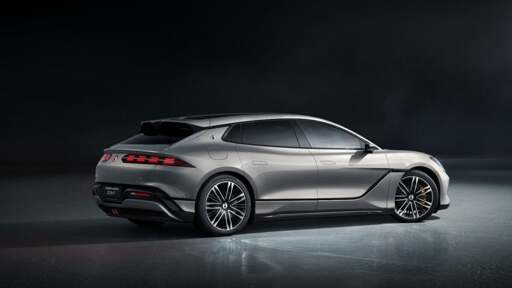
That‘s the main problem in Europe as well. I don‘t mind tariffs on heavily subsidized cars that are designed not to make profit but to destroy our industries. However, even then our manufacturers are in a constant crisis mode and unable to adapt. It‘s really pathetic.
But hey, when the car lobby is dead maybe that means more trains and cycling paths in the long run? Perhaps there‘s an opportunity here.
China has the battery production technologies and capabilities, the electric motor production, an unbelievable economy of scale, and insane levels of automation in their EV Factories, those are the main reasons behind their pricing and not “subsidies to destroy our industries”. Most subsidies, AFAIK, were tax cuts to purchases in China.
Are the subsidies specifically for destroying foreign markets? (😈MWAHAHAHAHAHAHA!)
Maybe, maybe not. I’m not a huge fan of the Chinese government, but I don’t think their subsidies program are intended to directly destroy foreign markets so much as put the country at the forefront of development and production… which can be perceived as the above.
In depth study of the Chinese GreenTech subsidy system.
As the study goes into in depth, tax credits are just one part of the system. There’s also direct subsidies(funding) for R&D, which is understandably very expensive, and below market value land sales among other things. In 2019 China put the equivalent of 1.73% of their GDP into industrial support, with below market land sales being a substantial portion of that. Next highest on the graphic is Korea at 0.67% GDP equivalent.
Moving away from the subsidies thing.
(Found this out awhile ago when I was watching a video on how actually ridiculous the whole US - Greenland thing was.)
China has ~90% of the rare earth refinement capacity. Even if Trump wants/wanted Greenland for it’s resources, it would be over a decade to spin up enough refinement infrastructure to process whatever they would hypothetically extract.
China has invested HEAVILY in the entire supply chain from resource extraction to final product for a wide swath of GreenTech. When a lot of the rest of the world has switched from a majority production/export to majority consumption/import economy, or focused on soft products/research/etc of course they would see a country flooding their markets with products as adversarial. Regardless of if those foreign products are superior. Especially if the government of said foreign country is often interfering in political processes, intimidating other countries citizens, setting up extra judicial secret police networks in many countries, economic coercion…etc etc etc.
I’m not entirely convinced that the subsidy system is malicious, but the CCP isn’t above playing dirty. So I can fully understand the common reaction being that it is.
in 2023, Tesla released all the specs to move EVs to a 48V architecture to Detroit, saving a tremendous amount of wiring and eliminating the need for most sub systems and secondary computers. Detroit just ignored it, until 2026, and now Ford invented 48V architecture.
It’s all thanks to Germany though. They are the ones who have succeeded in scrapping the bill to ban new ICE vehicle sales after 2035
Canada did the same thing. We also got rid of the carbon levy.
If it has to be forced, then it probably isn’t a good idea.
We’re only just now. Like this year just now, seeing batteries that can be made much cheaper and last much longer (sodium ion) and batteries that will last the actual lifetime of a vehicle (solid state lithiums, allegedly). The cars the past 5 years that have had LifePO4 batts will last decently long. Up until now you’ve been looking at EV’s that cost more, with batteries that will go bad in them that cost huge amounts of money to replace. A 10 year old Tesla with 200,000 miles on it is essentially garbage. No one will pay much for it because it’s about to need a $15,000 battery, and when it fails it’s going to the junk yard. My little ice car has nearly 300,000 miles on it and is old enough to vote. If the engine blows up I could buy a working used one for like $500 and install it myself, or pay somebody else a couple grand to deal with it all for me.
Passenger cars aren’t the end all be all to global warming or the environment, either. They aren’t the main cause. Most countries grid systems couldn’t handle a complete EV swap by 2035. Look at the issues these stupid ai server farms are causing grid systems.
My point is, no one should need to force ev. At this point it will become the better and obvious choice over ice on its own. It isn’t there yet for tons of people or countries.
That’s pretty rare though. Less than 5% of EVs need a battery replacement after 10 years (including those with defective batteries), and modern EV batteries should last at least 20 years, after which they’re still estimated to have around 65-70% capacity.
That’s not pretty rare, and with lithium batteries it’s also a guaranteed capacity loss, even if there’s not many power cycles to them. Age is a huge determinate factor in capacity and power loss in lithium batteries. The capacity loss also isn’t on a straight line scale. It increases with time. One or two percent a year loss for the first 5 years and then it will get bigger and bigger. Unlike an ice vehicle that’s kept in a garage and taken care of that can got well over 200,000 miles almost regardless of age, an EV currently can’t do that. They’re terrible in the 2nd and third hand market. A 20 year old EV will be useless.
Never understood why EVs aren’t made with standardized hot swappable cells. Would solve the range problem and the wear problem.
There was at least one company several years ago that was trying. Go to a place and pay a fee, kind of like how you’d swap out a propane gas bbq grill tank. They’d forklift out the empty batt and forklift in the charged one, was their game plan.
The tech is all too knew for standardization. Too many chemistries and voltages and places to figure out where to stick batteries.
If what catl is producing right now is correct and true, we should be all set in the coming future. Supposed sodium batteries at 175wh per kilogram and over 10,000 charge cycles and very fast charging. Great for sub 300 mile range small econo vehicles. Then the solid state lithiums they’re working on are also supposed to have a high amount of charge cycles and energy densities close to 500wh\kg, which will give plenty of range and make the cars lighter, which is really needed to ease up on suspension and efficiency and tread wear.
https://en.wikipedia.org/wiki/Tesla_battery_station
Isn’t profit supposed to bring prices down?
Looks like crapitalists are scared to shit of free market competition.